

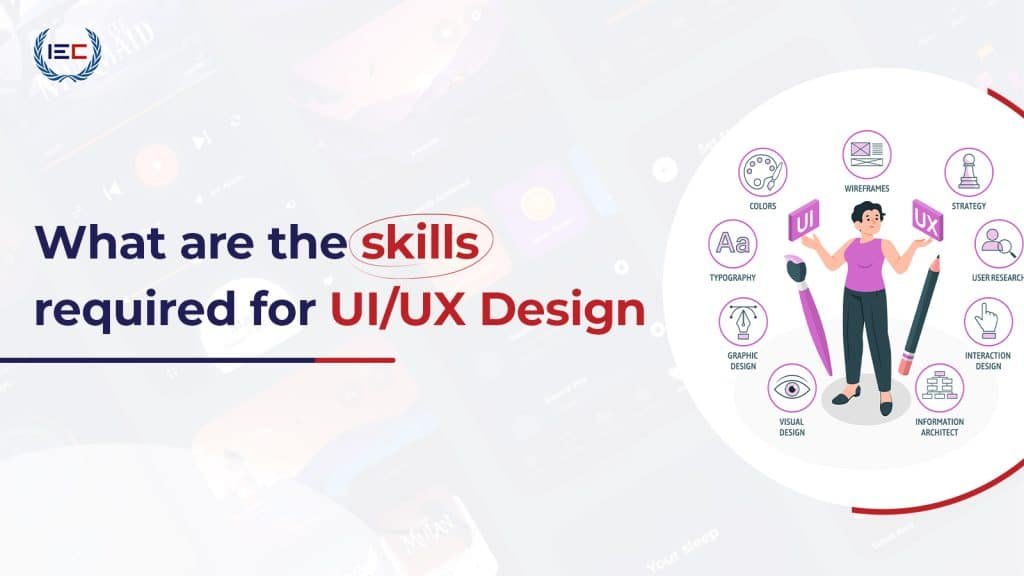
A strong user interface (UI) and user experience (UX) are critical to the success of any product. As the demand for skilled UI/UX designers grows, understanding the essentials required for this role is vital. Whether you’re starting a career in design or aiming to refine your expertise, this guide provides an in-depth look at the skills required for UI/UX designers, how these skills align with industry demands, and how the Institute of Emerging Careers (IEC) equips learners with these abilities.
Why Are UI/UX Design Skills Crucial?
UI/UX design shapes how users interact with digital products. Exceptional design ensures usability, accessibility, and engagement, directly impacting user satisfaction and product success. Here are the top skills required to excel as a UI/UX designer:
1. User Research and Empathy
- Why It Matters: Understanding user behavior, needs, and pain points is the foundation of effective design.
- Key Techniques: Surveys, interviews, usability testing, and creating user personas.
- How IEC Helps: IEC’s courses emphasize user research, teaching students to gather insights and apply them to design decisions.
2. Wireframing and Prototyping
- Why It Matters: These tools help visualize ideas and test usability before full development.
- Key Tools: Figma, Adobe XD, Sketch, and Axure RP.
- How IEC Helps: Learners get hands-on experience with industry-standard tools to create wireframes and prototypes.
3. Visual Design
- Why It Matters: Aesthetics play a crucial role in attracting and retaining users.
- Key Elements: Typography, color theory, imagery, and branding.
- How IEC Helps: IEC’s curriculum dives deep into visual design principles, ensuring students master the art of creating visually appealing interfaces.
4. Interaction Design
- Why It Matters: Interaction design focuses on creating intuitive and enjoyable user interactions.
- Key Aspects: Animations, transitions, and interactive elements.
- How IEC Helps: The course includes modules on crafting smooth and meaningful interactions for web and mobile platforms.
5. Information Architecture
- Why It Matters: Organizing content logically improves usability and ensures users can find what they’re looking for.
- Key Skills: Structuring sitemaps, categorizing content, and designing navigation.
- How IEC Helps: Students learn to plan and design information structures that enhance the user journey.
6. Responsive Design
- Why It Matters: With varied devices, ensuring designs work seamlessly across screen sizes is crucial.
- Key Techniques: Adaptive layouts, fluid grids, and breakpoints.
- How IEC Helps: IEC’s training ensures learners are adept at creating designs compatible with diverse devices.
7. Collaboration and Communication
- Why It Matters: UI/UX designers work closely with developers, product managers, and stakeholders.
- Key Abilities: Effective communication, feedback handling, and teamwork.
- How IEC Helps: The course emphasizes collaborative projects, preparing students for real-world team dynamics.
8. Coding Fundamentals
- Why It Matters: Basic coding knowledge bridges the gap between design and development.
- Key Languages: HTML, CSS, and JavaScript.
- How IEC Helps: IEC includes coding basics, empowering designers to communicate effectively with developers.
9. Problem-Solving and Critical Thinking
- Why It Matters: UI/UX designers must address user pain points and deliver effective solutions.
- Key Approaches: Analyzing problems, brainstorming solutions, and iterating designs.
- How IEC Helps: The course focuses on design thinking processes to enhance problem-solving skills.
10. Data-Driven Design
- Why It Matters: Leveraging analytics ensures designs align with user behavior and business goals.
- Key Tools: Google Analytics, Hotjar, and user feedback tools.
- How IEC Helps: Students learn to analyze data and apply insights to refine designs.
How IEC Prepares Future UI/UX Designers
The Institute of Emerging Careers (IEC) is committed to nurturing talent for high-demand industries. Our UI/UX Design course encompasses all the essential skills mentioned above, equipping learners with:
- Practical Experience: Real-world projects to build a strong portfolio.
- Mentorship: Guidance from industry professionals.
- Cutting-Edge Tools: Training on the latest design software and technologies.
- Job-Ready Skills: Mastery of technical and soft skills demanded by employers.
Graduates of IEC’s programs have secured impactful roles in the industry, proving the effectiveness of our curriculum.
Conclusion
UI/UX design is a blend of creativity, technical proficiency, and user-centered thinking. Mastering the skills required for a UI/UX designer ensures a fulfilling career in a rapidly evolving field. By joining IEC, aspiring designers gain the expertise and confidence needed to thrive in this domain. Whether you’re passionate about creating seamless user experiences or elevating digital designs, IEC is your gateway to success.

Muhammad Ahmad is writer-turned-UX Designer with a passion for crafting thoughtful digital experiences. With 3+ years of experience building scalable design systems and tackling complex challenges at places like Motive and Bayt, he thrives where creativity meets strategy.